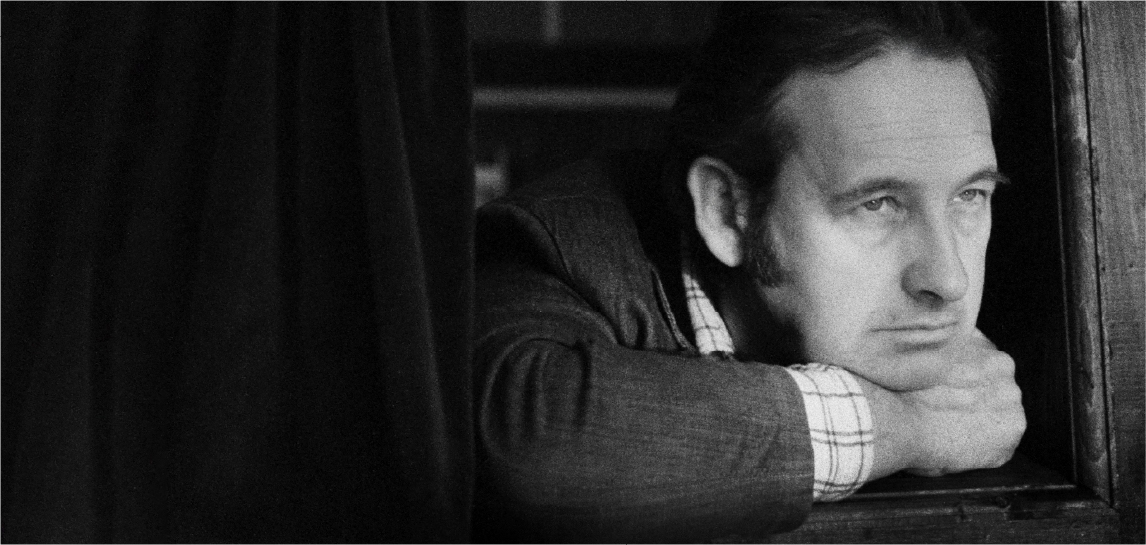
Wajda: On the Centenary of His Birth
The 6th of March 2026 marks the centenary of the birth of Andrzej Wajda, a prominent film and theatre director, proponent of the idea and founder of the Manggha Museum, a senator, draughtsman, Kyoto Prize laureate and recipient of the Honorary Academy Award for lifetime achievement in filmmaking.
A number of Andrzej Wajda exhibitions have been held over the years. He would often choose this form of expression himself, in addition to books and documentaries, with a view to putting his work in a broader perspective. This, however, is the first show in which his wife, Krystyna Zachwatowicz-Wajda, will be presenting the artist’s profile through photographs she has selected herself, along with his notes, working sketches, and quotations.
The exhibition is not intended as a linear, chronological biography. Instead, it touches on selected aspects of Wajda’s life such as his experience of World War II, the impact the war had on the filmmaker in the earliest phase of his work, his fascination with painting and friendships with prominent artists (Andrzej Wróblewski, Józef Czapski), the period of social rebellion during the ‘carnival of Solidarity’ and its political repercussions, involving the imposition of martial law in Poland, as well as the director’s cultural engagement and commitment to civic activism, as exemplified by such projects as the X Film Unit, the Wajda School of Film, or the Wyspiański Pavilion.
A separate part of the exhibition will focus on the Japanese threads in Andrzej Wajda’s biography. Works by Japanese ukiyo-e masters will form the leitmotif here, along with the filmmaker’s drawings sketched during his numerous trips to Japan, which he continued to visit over a period spanning more than 25 years. His fascination with Japan dates back to 1944, when he viewed the exhibition prepared by the German occupying authorities in Kraków’s Cloth Hall Gallery in honour of their Japanese allies. It was then that, under rather adverse circumstances, young Wajda first came into contact with such names as Hiroshige, Utamaro, and Hokusai. That encounter was bookended, in a way, by the completion of a long period filled with trips and new friends with the inauguration – exactly five decades later – of the Manggha Centre (today’s Museum) of Japanese Art and Technology, initially a branch of the National Museum in Kraków.
The exhibition Wajda: On the Centenary of His Birth will not highlight each of Wajda’s works in film or theatre. His biography is too multifaceted, and he himself was too multidimensional a figure, to admit such a possibility. It will rather be a subjective statement by Krystyna Zachwatowicz-Wajda on her husband, who passed away ten years ago. A private tale told with her own words and some of the drawings that the artist left us in his archive.
A number of Andrzej Wajda exhibitions have been held over the years. He would often choose this form of expression himself, in addition to books and documentaries, with a view to putting his work in a broader perspective. This, however, is the first show in which his wife, Krystyna Zachwatowicz-Wajda, will be presenting the artist’s profile through photographs she has selected herself, along with his notes, working sketches, and quotations.
The exhibition is not intended as a linear, chronological biography. Instead, it touches on selected aspects of Wajda’s life such as his experience of World War II, the impact the war had on the filmmaker in the earliest phase of his work, his fascination with painting and friendships with prominent artists (Andrzej Wróblewski, Józef Czapski), the period of social rebellion during the ‘carnival of Solidarity’ and its political repercussions, involving the imposition of martial law in Poland, as well as the director’s cultural engagement and commitment to civic activism, as exemplified by such projects as the X Film Unit, the Wajda School of Film, or the Wyspiański Pavilion.
A separate part of the exhibition will focus on the Japanese threads in Andrzej Wajda’s biography. Works by Japanese ukiyo-e masters will form the leitmotif here, along with the filmmaker’s drawings sketched during his numerous trips to Japan, which he continued to visit over a period spanning more than 25 years. His fascination with Japan dates back to 1944, when he viewed the exhibition prepared by the German occupying authorities in Kraków’s Cloth Hall Gallery in honour of their Japanese allies. It was then that, under rather adverse circumstances, young Wajda first came into contact with such names as Hiroshige, Utamaro, and Hokusai. That encounter was bookended, in a way, by the completion of a long period filled with trips and new friends with the inauguration – exactly five decades later – of the Manggha Centre (today’s Museum) of Japanese Art and Technology, initially a branch of the National Museum in Kraków.
The exhibition Wajda: On the Centenary of His Birth will not highlight each of Wajda’s works in film or theatre. His biography is too multifaceted, and he himself was too multidimensional a figure, to admit such a possibility. It will rather be a subjective statement by Krystyna Zachwatowicz-Wajda on her husband, who passed away ten years ago. A private tale told with her own words and some of the drawings that the artist left us in his archive.