To accompany the exhibition
Suiseki at the Europe–Far East Gallery, the Manggha Museum offers a display of works titled
Tremor by Aleksandra Sikora, a Kraków artist and graduate of the local Academy of Fine Arts.
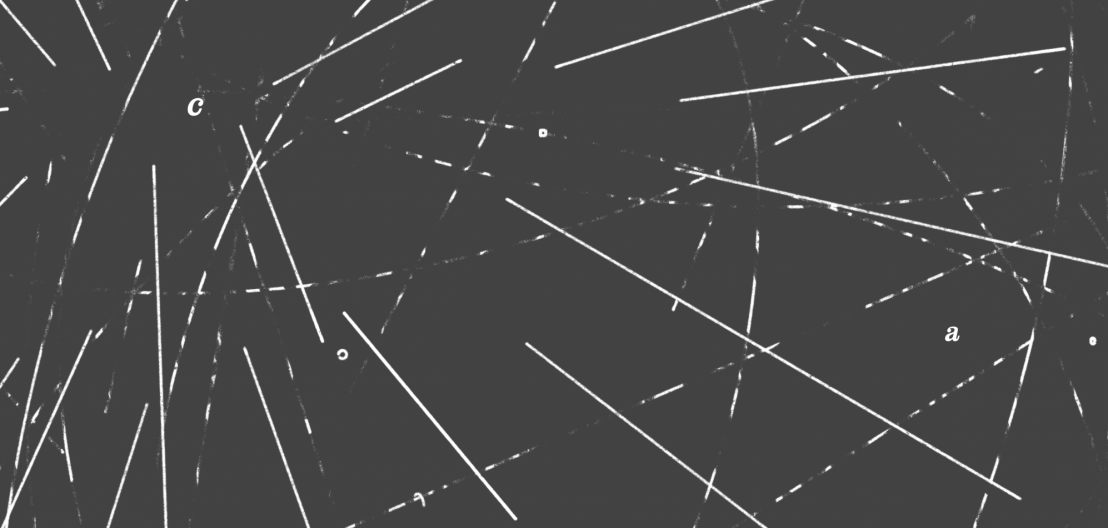
The artist’s practice involves an analytical approach to the components of landscape. Sikora generates her own system of signs, a kind of code in which she records and processes impressions harvested from nature. The challenge of tackling the stony matter consists in contemplative, well-nigh ritual probing of its rhythm and structure. In the face of the Anthropocene, such activities are a new type of geology, a separate act of scribing, engraving, dictated by human intuition and gesture. In this way they become an hommage to nature, especially those of its elements that have witnessed its history and evolution since the dawn of our planet. Drawing – the mindful and slow filling of a canvas or a sheet of paper with miniscule ‘writing’ – is a therapeutic tool for the artist, often helpful in finding an adequate balance and peace of mind. Once completed, the picture becomes a private seismogram: each of its various sections has been recorded under the spur of a specific mood and the emotions experienced at a given moment.
The works selected for the display come from the series
postgeology, which the artist has been working on since 2019. The show at the Manggha Museum is an event accompanying the
Suiseki exhibition held at the Europe–Far East Gallery. The title is a reference to geology – the tremor inherent to the motion of the earth and also pertinent to the practice developed by the artist, consisting in transferring the impulses of her body onto the surface of a picture or object.
Suiseki and MindfulnessThe Japanese tradition of
suiseki, or the art of seeking out, selecting, displaying, and interpreting small, naturally shaped stones, has had a recurring presence at the Manggha Museum of Japanese Art and Technology for more than a decade. Natural stones symbolically represent the beauty of nature and their harmony in the curators’ timeless interpretations. The present suiseki show focuses on building a fragmentary landscape as well as the minimalism and contemplation that come with these extraordinary rocks, which become veritable art objects in the exhibition space.
Works from Aleksandra Sikora’s
postgeology series that are displayed to accompany this exhibition make surprising references to Japanese aesthetic values, adapting them for their own artistic contexts. Using as her point of departure nature and matter (signalled by geology in the title), the artist combines it with modern aesthetics, experimenting with materials and techniques. This reveals relations existing between the Japanese art of suiseki and contemporary Polish art, becoming a fascinating example of seeking intercultural dialogue and finding traditional values in the context of modernity.
In Japanese tradition, stones play an important role in both the spiritual and the symbolic dimensions. Their meaning is deeply ingrained in Japanese culture, religion, and Zen philosophy. In
suiseki, stones represent physical and spiritual stability grounded in matter and its permanence, and when arranged in a
tokonoma, they symbolise mountainous landscape.
When looking at Aleksandra Sikora’s works, we find that they share many of these elements. Spirituality, nature, and peacefulness are captured by a meditative execution of drawing, harmonious lines, and the gentleness of shapes. The process itself is one of the artist’s key modes of operation: filling empty spaces, creating a path, seeking a way, both literally – constructing the artwork – and in the spiritual sense – in reference to mindfulness, contemplation, care, and empathy.
All of this is conducive to developing a unique style that combines Eastern and Western aesthetics, underscoring the universal quality of the beauty hidden in nature and tradition.
Such is the artist’s Japanese path towards understanding nature.
Katarzyna Nowak